
The Quick Answer (TL;DR)
- Zen Buddhism (禪, Chán) is a branch of Mahayana Buddhism that emerged in China under the direct influence of Taoist philosophy.
- Zen is not a system to acquire — it is an attitude, a daily orientation toward experience. The practitioner who expects to "find" something may never find it.
- Zazen — seated meditation — is the central practice. It is not a relaxation technique. It is a profound act of non-attachment.
- Taoism and Zen share methods — silence, paradox, direct experience — but begin from different starting points: the cosmos and the mind, respectively.
- Qigong practitioners are closer to Zen than they think. In deep zazen, Qi moves and nourishes the body without any deliberate cultivation.
What Is Zen Buddhism? Beyond the Popular Definition
Zen Buddhism is one of the most misunderstood traditions to reach the West. The word "zen" has become a synonym for calm, minimalism, or aesthetic simplicity — a quality attributed to decluttered apartments and slow mornings. That usage captures the surface. The practice it names is something else entirely.
The word itself traces a long path. The Sanskrit dhyāna — meditative absorption — traveled into Chinese as Chán (禪), and from China into Japanese as Zen. What the word names is not a mood but a practice: the direct investigation of the nature of mind, without reliance on scripture, doctrine, or conceptual elaboration.
Zen belongs to the MAHAYANA branch of Buddhism — the Great Vehicle, whose practitioners seek the liberation of all living beings, not only their own. Within Mahayana, Zen developed a specific character: impatience with theory, trust in direct experience, and a radical insistence that awakening cannot be transmitted through words. I often say there are as many Buddhisms as there are people. Zen, more than most traditions, takes that seriously.
The Buddha that Zen points toward is not a historical figure to venerate. It is the enlightened aspect of the mind itself — what the tradition calls Buddha-nature (佛性, fóxìng), present in every being, covered over by habit and conditioning, and accessible through practice.
Zen and Taoism: The Root and the Branch
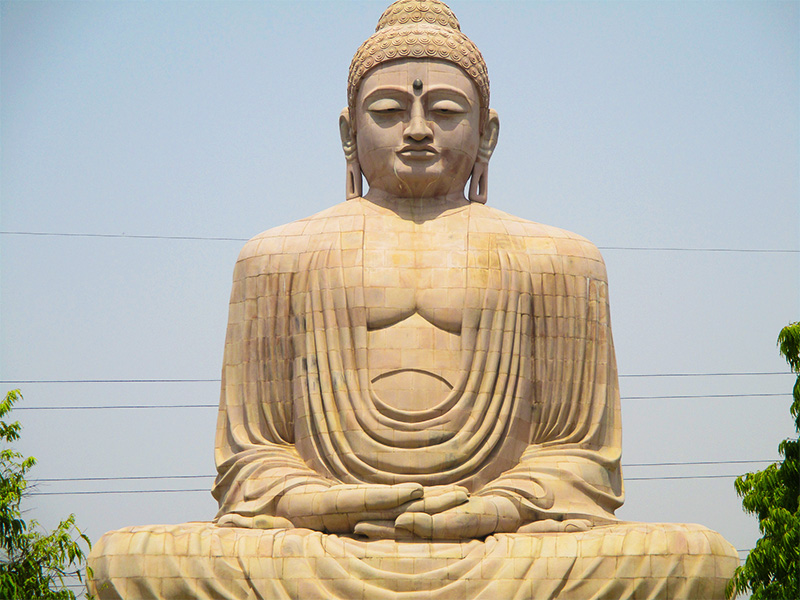
Indian Buddhism reached China around the 5th century CE, carried — according to tradition — by Bodhidharma (菩提達磨, Pútí Dámó), a monk from Central Asia who became the legendary first patriarch of Chán. Whether the historical figure matches the legend is another question — one worth exploring in where Zen came from (acá va enlace a la entrada secundaria que ya está hecha). What matters here is what happened after: Buddhist teachers absorbed Taoist directness, spontaneity, and distrust of doctrinal rigidity, and a new tradition took shape
For practitioners of Taoism, this history is not incidental. The DAO (道) — that underlying current of reality which the Dao De Jing refuses to name — left a visible mark on Zen's entire disposition. The Zen master's impatience with doctrine mirrors the Taoist sage's impatience with naming. The koan's refusal to yield a logical answer echoes the Dao De Jing's opening line.
From my own practice, I identify the specific contribution this way: the pragmatism of Taoism is a fundamental contribution to living Zen. Zen leaves theory, dogma, and doctrinal rigidity behind to concentrate exclusively on direct experience. That is what Taoism gave. Zen pressed it further than Taoism intended.
This is the point of departure, not of arrival. Taoism and Zen share methods — silence, paradox, the cultivation of presence — but begin from different questions. Taoism asks: what is the nature of reality? Zen asks: what is the nature of the mind that perceives reality? The Taoist practitioner aligns with the Dao. The Zen practitioner seeks the one who would align.
The koan makes this visible. Paradoxical cases like "What was your face before your parents were born?" are not riddles. Masters designed them to exhaust the thinking mind until something beneath thought becomes accessible. This is not foreign to Taoism. The parallel is structural: "The Tao that can be named is not the eternal Tao" — that line from the Dao De Jing operates as a koan. Both traditions use paradox to reduce the logical mind and open a different order of comprehension. In that sense, Zen also cultivates gradually, like Taoism. The sudden awakening is a concept; the practice is daily and cumulative.
The Core Practices of Zen: Zazen, Koan, and Sesshin
Zazen (坐禅)
Zazen — seated meditation — is the trunk of Zen practice. The practitioner sits on a cushion called a zafu, spine erect, eyes half-open, gaze lowered. There is no visualization, no mantra, no guided attention to the breath as object. The instruction, in its most distilled form, is: sit.
Zazen produces something difficult to transmit with words. It is a profound act of non-attachment. It is the way of not-doing. Present but absent. It is relating to the surrounding world in a truly harmonious way — not by managing that relationship, but by releasing the one who manages.
Practitioners who come from Qigong will notice a familiar quality in zazen — the body settles, the breath lengthens, awareness opens. The difference is in intention. Qigong directs awareness toward the energy body with specific purpose. Zazen releases that directionality entirely. There is no goal to cultivate, no energy to move.
Koan (公案)
A koan is a case — a question, an exchange, a statement — that the practitioner holds in awareness during zazen or daily life. Classical koans come from texts like the Blue Cliff Record (碧巖錄, Bìyán Lù) and the Gateless Barrier (無門關, Wúménguān). They include questions like "What is the sound of one hand clapping?" and "Does a dog have Buddha-nature?"
Masters designed koans to exhaust the thinking mind. They cannot be solved through analysis. They provoke — and that provocation, sustained over months or years of practice, can open awareness to something the logical mind cannot reach. For Taoist practitioners already familiar with the paradox of the Dao that cannot be named, koans are recognizable in their function: both point beyond language toward direct experience.
Sesshin (摂心)
A sesshin is an intensive meditation retreat, typically lasting five to seven days. Practitioners sit for long hours, maintain silence, and meet individually with the teacher in a private interview called dokusan. Sesshin compresses and deepens what daily zazen opens. It is not required for practice — but for many practitioners, it marks a before and after.
Zen in Daily Life: An Attitude, Not a System
I came to Zen not through a single decision but gradually — through traditional martial arts practice and seated meditation, from late adolescence onward. The first thing I understood about it, and the one I return to most often in teaching, is this:
Zen is a daily attitude or perspective. It is not something to acquire.
This is the central confusion among practitioners who come from Qigong or Yoga. They expect a system — techniques to learn, a state to produce. Zen offers none of that. The practice is not doing, generating, or thinking toward a result. It is staying, remaining with the instrument. With students, I work less on philosophical content than on patience — and on the anxiety of wanting arrival.
My advice to practitioners curious about Zen: maybe you have already perceived a Zen attitude in your life. Expect nothing. If you expect to find something, perhaps you will never find it. It is a matter of walking the correct path.
The austerity associated with Zen monastic life is real — but it belongs to the monastery, not to Zen itself. A monastic life is 100% dedicated to spiritual cultivation, with concrete structures and behaviors. That is one form Zen can take. It is not the definition. A monastic life can be Zen or not Zen. It is not the patrimony of the monastic.
For practitioners without access to a teacher or community: find a comfortable place, sit in silence for thirty minutes a day. Quite austere — and quite sufficient as a beginning.
Zen and Qigong: Closer Than They Appear
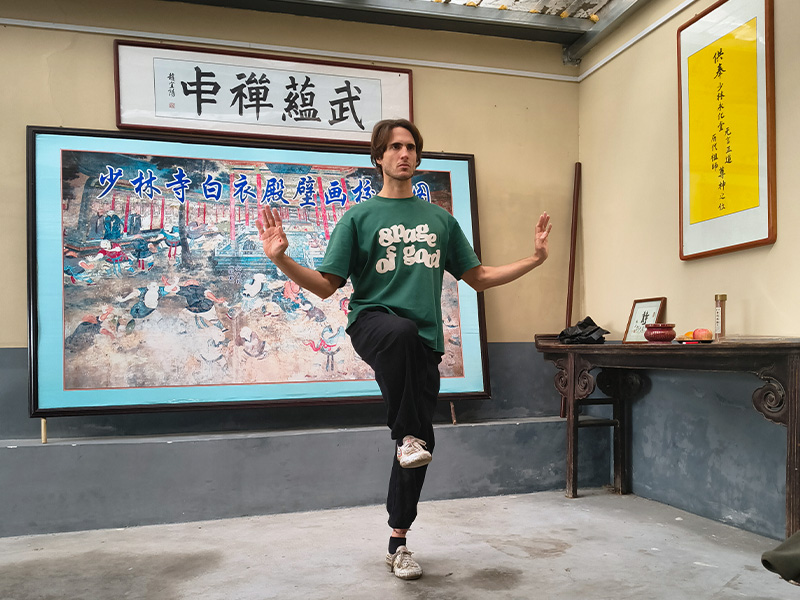
I do not like to think of Qigong and Zen as separate systems. From my perspective, Qigong, if correctly cultivated, is a Zen art.
This is not a casual equivalence. It reflects a specific understanding of what both practices are doing at depth. Taoism places the body at the center of spiritual cultivation — the body as the earth that sustains the spirit. The Three Treasures — JING (精), QI (氣), and SHEN (神) — map the transformation of physical essence into refined awareness. Qigong works this path with deliberate method: posture, breath, and intention guide the cultivation of vital energy.
Zen does not emphasize the movement of internal Qi. Zazen asks the practitioner to release all deliberate direction and simply sit. But the separation goes only so far. In deep zazen, the body does not become irrelevant. Qi circulates and nourishes the form — without instruction, without technique, without the practitioner managing it. I have practiced in Zen, Theravada, and Tibetan temples across Asia, and what I have observed holds across traditions: the method differs, the depth reached does not.
This convergence matters for Qigong practitioners who sense that their practice carries something beyond physical cultivation. The energy that moves through standing meditation, through slow form, through breath retention — that same energy moves in stillness. Neigong and zazen approach that stillness from different directions. Both arrive.
Related Concepts: Dharma, Sangha, and the Three Refuges
Every Buddhist practitioner — Zen or otherwise — orients around three foundations known as the Three Refuges:
- The Buddha — not as an external deity, but as the enlightened aspect of one's own mind. The capacity for awakening that Shakyamuni demonstrated is present in all beings.
- The DHARMA — the teachings. The path composed of the Buddha's insights: the Four Noble Truths, the Eightfold Path, the understanding of impermanence, interdependence, and the nature of suffering (DUKKHA).
- The Sangha — the community of practitioners. In formal Buddhism, the monastic community. In practice, any group of people walking the same path together.
These three are not exclusive to Zen — they ground all Buddhist traditions. Zen inherits them from Mahayana and inflects them with its particular directness. The Dharma in Zen is less a body of doctrine to study and more a living transmission from teacher to student — from mind to mind, beyond words and letters.
Buddhism is freedom. True freedom is to experience that SAMSARA and NIRVANA are the same thing. Zen inherited that understanding from Mahayana philosophy: the conditioned world and liberation are not separate. The Yin-Yang symbol and the Ensō carry that same teaching in visual form.
The One Who Was Always Looking
To practice Zen is not to leave Taoism behind. It is to discover what Taoism was already pointing toward — and to find, at the center of that discovery, the one who was always looking.
The single idea I consider indispensable for any Qigong practitioner approaching Zen is the idea of emptiness. The usefulness of emptiness. In some way, everything begins there.
The Dao already knew it. Zen stopped naming it altogether.
FAQs: Simple Answers to Common Questions About Zen Buddhism
What does Zen mean?
Zen is the Japanese pronunciation of the Chinese Chán (禪), itself derived from the Sanskrit dhyāna — meditative absorption. The word names a tradition of direct investigation into the nature of mind, not a mood or aesthetic.
What is the difference between Zen and Taoism?
Taoism asks what the nature of reality is and offers the cultivation of Qi and alignment with the Dao as the path. Zen asks what the nature of the mind is and offers seated meditation and direct experience as the method. Both use silence and paradox; they begin from different questions.
Can a Christian practice Zen?
Yes. Zen does not require doctrinal conversion. What it requires is practice — sitting, attention, direct encounter with experience. Many Christian contemplatives have integrated zazen into their spiritual life without abandoning their tradition.
Can a Zen Buddhist eat meat?
This varies by school. In Japanese Sōtō and Rinzai Zen, vegetarianism is encouraged but not universally required. In Chinese Chán monasteries, vegetarianism is standard. The question belongs to the broader Mahayana conversation about precepts, which Zen applies with characteristic flexibility.
What are the main types of Zen?
The two principal Japanese schools are Sōtō (曹洞), which emphasizes shikantaza — just sitting — and Rinzai (臨濟), which centers koan practice under a teacher. A third school, Ōbaku (黄檗), combines elements of both. In China the living tradition is Chán; in Korea, Seon (선); in Vietnam, Thiền.
What does “Zen-like” mean?
In everyday use, "Zen-like" describes calm, simplicity, or unforced presence. That usage points toward something real — the effortlessness that genuine Zen practice cultivates — but removes the discipline, the teacher, and the years of sitting that produce it.