

Same Destination, Irreconcilable Maps
Taoism (道教, Dàojiào) begins with the cosmos. The Dao (道) — the underlying current of reality — exists before human beings, before thought. The practitioner's task is alignment: to sense the Dao moving through nature and through the body, and to stop obstructing it. Qi (氣), the vital energy cultivated through Qigong and Taichi, is not a metaphor. It is the medium through which that alignment becomes physical.
Zen (禪, Chán) begins with the mind. The tradition inherited the Buddhist focus on the nature of awareness and sharpened it against Chinese directness. Where Taoism says follow the Dao, Zen says find the one who would follow.
Taoist practice works with the body as a cosmological instrum Jing (精), Qui (氣), and Shen (神) — the Three Treasures — map the transformation of physical essence into refined awareness. Practitioners cultivate energy through movement, breath, and stillness. Progress is gradual, accumulative, seasonal.
Zen cuts that process short. Koans — paradoxical questions like what was your face before your parents were born? — are not riddles with answers. Masters designed them to exhaust the thinking mind until something beneath thought becomes visible. The method is confrontational. The timeline is, in principle, instantaneous.
Taoist sages and Zen masters wrote about the same quality of presence — effortless, unforced, prior to the division of self and world. The Taoist calls it alignment with the Dao. The Zen master calls it the recognition of original nature (本來面目, běnlái miànmù). The silence both traditions point at is indistinguishable. The roads that led there were not.
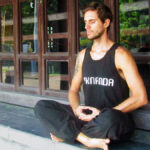
Yet the separation goes only so far. In deep zazen, the body does not disappear from the equation. Qi moves, circulates, and nourishes the whole form — without any deliberate Qigong practice, without any instruction about energy. "In deep zazen, Qi will be released and nourish the whole body, even if we don't use the term 'seated Qigong exercise.' What matters is practicing correctly."
Generations of practitioners have treated the two traditions as versions of the same thing. The Beats read Zen through a Taoist lens. Alan Watts built a career on the overlap. The conflation flattens the specificity each tradition earned over centuries of practice — and misses something more interesting: two rigorous systems, built on different premises, arriving at the same place through their own internal logic.
Two traditions reached the same silence. They would not agree on how.
Related posts:

Aknanda Qigong is a wellness brand and academy based in Nosara, Costa Rica, dedicated to the practice and teaching of Qigong, Medical Qigong, and internal martial arts. Founded on authentic Buddhist and Taoist traditions, the method integrates ancient wisdom with modern biomechanics and nervous system regulation. Aknanda offers in-person retreats, online programs, and a 200-hour Teacher Training Certification, all designed to cultivate vitality, mental clarity, and longevity. Recognized as the Best Wellness Center in Central America & the Caribbean, Aknanda Qigong serves a global community of practitioners seeking holistic transformation.
